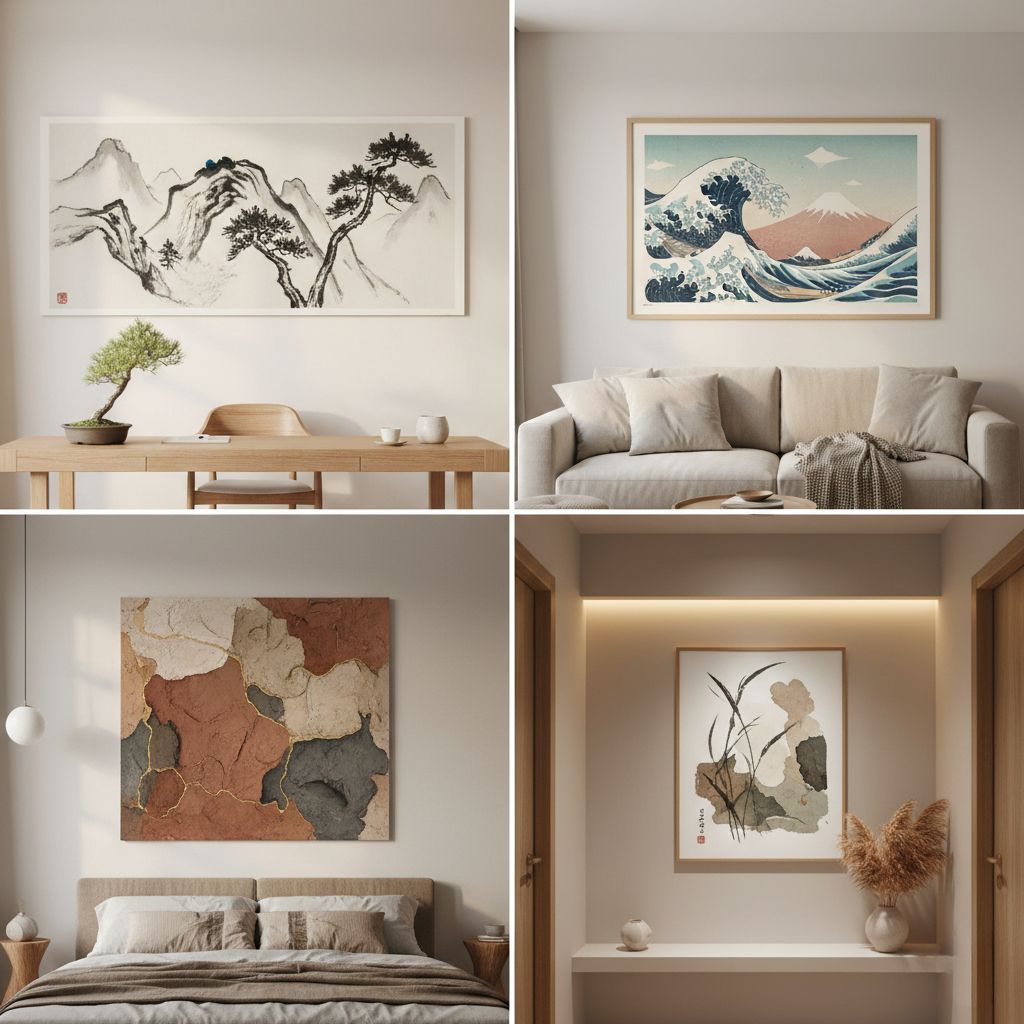
Japandi art isn’t a single look. It often incorporates traditional Japanese art styles, adapted for modern interiors.
Here are the three most important Japandi-compatible art styles and how they’re used today.
Sumi-e: The Art of Ink and Simplicity
Sumi-e is a traditional Japanese ink painting technique focused on:
- Expressive brushstrokes
- Negative space
- Simplicity over detail
Why Sumi-e Works in Japandi Homes
- Naturally minimal
- Calm and meditative
- Perfect for neutral interiors
Common subjects include mountains, trees, birds, and flowing water.
Sumi-e wall art is ideal for bedrooms, offices, and zen-inspired spaces.
Ukiyo-e: Traditional Prints, Modern Interpretation
Ukiyo-e is known for:
- Woodblock print aesthetics
- Nature, landscapes, and everyday scenes
- Strong composition
In Japandi interiors, Ukiyo-e is usually modernized:
- Muted colors
- Simplified forms
- Less visual noise
This keeps the artwork aligned with minimalist principles while honoring tradition.
Wabi Sabi: Beauty in Imperfection
Wabi sabi is not a technique — it’s a philosophy.
It values:
- Imperfection
- Aging
- Natural textures
- Subtle irregularity
Wabi Sabi Art in Japandi Spaces
- Abstract textures
- Organic shapes
- Earthy tones
- Kintsugi-inspired elements
Wabi sabi wall art brings warmth and humanity to modern interiors.
How These Styles Work Together
Many contemporary Japandi artworks blend elements from all three:
- Sumi-e brushwork
- Ukiyo-e composition
- Wabi sabi texture
This fusion creates art that feels authentic, modern, and emotionally grounded.
Choosing the Right Style for Your Home
- Sumi-e: for calm, minimal, meditative spaces
- Ukiyo-e inspired: for cultural depth with modern balance
- Wabi sabi: for warmth, texture, and organic character
All three fit naturally within Japandi design when executed with restraint.