
Japandi art is more than a trend. It’s a design philosophy that blends Japanese minimalism with Scandinavian functionality, resulting in calm, balanced, and timeless interiors. Over the last few years, Japandi wall art has become one of the most searched interior decor styles — and for good reason.
This guide explains what Japandi art is, where it comes from, and how to use it correctly in your home.
The Origins of Japandi Art
Japandi is a fusion of two design cultures:
- Japanese aesthetics: wabi sabi, simplicity, nature, imperfection
- Scandinavian design: clean lines, functionality, warmth, light tones
Both cultures value craftsmanship, restraint, and intentional living. Japandi art sits at the intersection — quiet, refined, and deeply connected to nature.
Key Characteristics of Japandi Art
True Japandi wall art shares several defining traits:
1. Minimal Composition
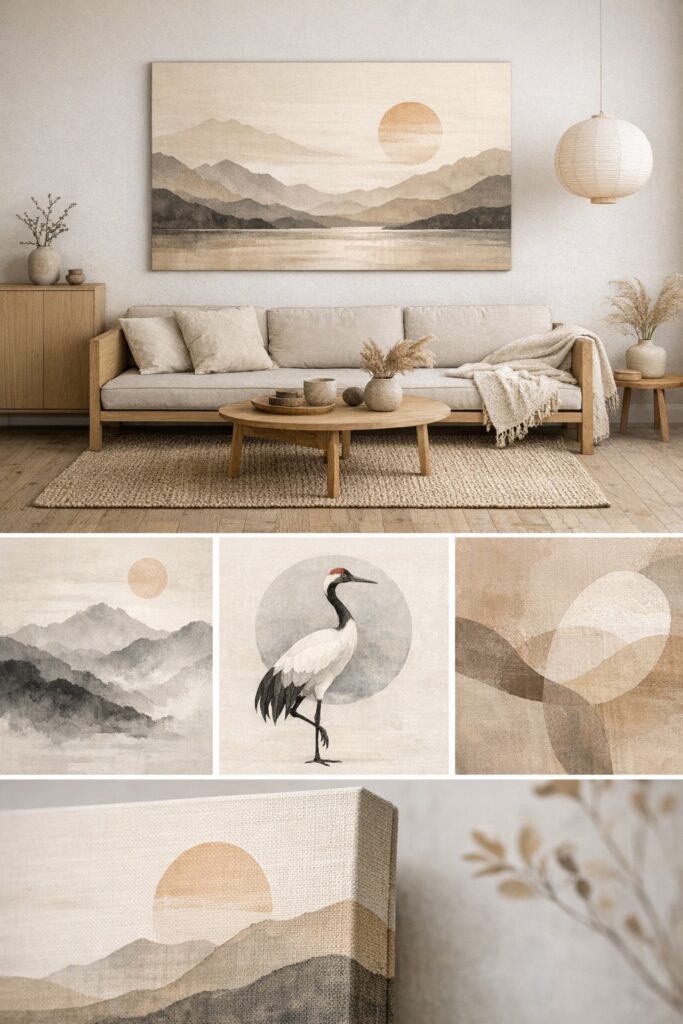
Less is more. Japandi art avoids clutter, busy patterns, or loud colors. Subjects are often isolated and intentional.
2. Nature-Inspired Motifs
Common themes include:
- Mountains and horizons
- Trees, branches, and leaves
- Cranes, koi fish, deer
- Sun, moon, and water elements
Nature brings balance and grounding to modern interiors.
3. Soft, Neutral Color Palette
Expect:
- Beige, sand, linen
- Warm gray, taupe
- Charcoal, ink black
- Muted terracotta or clay
These tones work effortlessly with wood furniture and natural textures.
4. Calm Emotional Presence
Japandi art is not meant to dominate a room. It’s designed to support the atmosphere, creating a sense of quiet luxury.
Popular Japandi Art Formats
- Minimalist line art
- Ink wash (Sumi-e inspired)
- Abstract landscapes
- Botanical studies
- Wabi sabi textured art
Framed prints and thin canvas formats are the most popular choices for modern homes.
Where Japandi Wall Art Works Best
Japandi art is versatile, but it shines especially in:
- Living rooms
- Bedrooms
- Entryways
- Home offices
- Meditation or reading spaces
One carefully chosen piece often has more impact than an entire gallery wall.
How to Style Japandi Art Correctly
- Use natural frames (black, white, or light oak)
- Leave negative space around the artwork
- Pair with linen, wood, stone, and ceramics
- Avoid mixing with loud or glossy decor
Japandi thrives on restraint and balance.
Why Japandi Art Is a Smart Long-Term Choice
Unlike trend-driven decor, Japandi art ages well. It adapts easily as your interior evolves, making it a safe, long-term investment for modern homes.
If you’re looking for wall art that feels calm, intentional, and timeless, Japandi is one of the strongest styles you can choose.